
The mirror itself measures 48 inches tall. We cut it from a single sheet of beveled glass, which adds depth without the harsh edges you get from standard mirror cuts. The frame extends two inches beyond the glass on all sides, creating that authentic surfboard profile.
## The Construction Process Behind Authentic Surf Decor
We start every surfboard mirror by laying out reclaimed wood planks on our workshop floor. Some pieces are two inches wide. Others are six. The variation matters because real surfboards never look uniform.
I trace the surfboard template directly onto the wood arrangement. Then comes the tricky part: figuring out which grain directions complement each other. Vertical grain next to horizontal grain creates visual tension. All vertical looks too rigid. All horizontal looks lazy.
### Selecting Wood for Coastal Character
The wood selection takes longer than the actual construction. I reject about 40 percent of reclaimed planks because they lack character. Boring wood makes boring mirrors.
What I look for:
- Salt water staining from dock exposure
- Nail holes and hardware marks
- Color shifts from sun bleaching
- Grain patterns that suggest movement
A single surfboard mirror frame might combine five different wood types. Yesterday I used pine, mahogany, weathered cedar, old pallet oak, and a piece of driftwood maple. The final piece looked like it survived twenty years of beach house living.
## Handcrafted Details That Separate Real from Replica
The surfboard tail design determines whether your mirror reads as authentic or artificial. We cut three tail variations: fish tail, swallow tail, and pin tail. Each style references actual surfboard shaping traditions from different decades and surf cultures.
Fish tails work best in tight spaces because the split design creates negative space. The mirror at Vampire Penguin uses a fish tail specifically because their wall space sits between two doorways. The tail cutout allows sight lines through to the kitchen area.
Swallow tails give you more dramatic flair. These work in hotel lobbies and restaurant entry points where you want immediate visual impact. The deep V-cut in the tail creates strong vertical lines that draw eyes upward.
Pin tails deliver classic longboard aesthetics. These appeal to designers working on upscale properties where the reference needs to feel more sophisticated than playful.
## Installation Considerations for Commercial Spaces
Hotel and restaurant installations require different mounting than residential walls. We install French cleats on every surfboard mirror over 36 inches. The cleat system distributes weight across wall studs and allows easy removal for wall maintenance.
I learned this after a hotel maintenance team in Tampa called us because they needed to repaint. The mirror came down in two minutes, painting happened, mirror went back up. No damage, no stress, no service call fee.
The mirror weight matters for shipping and installation logistics. Our 48-inch surfboard mirrors weigh 18 pounds. Our 60-inch versions hit 25 pounds. This falls within single-person carry capacity, which reduces labor costs during installation.
## The Vampire Penguin Installation: A Case Study
The Ellenton location needed a focal point that connected their Hawaiian shaved ice concept with Florida beach culture. Their space has bright turquoise walls and white tile floors. A standard beach mirror would have disappeared into that color scheme.
We built their surfboard mirror using darker reclaimed wood tones: chocolate browns, deep grays, and sun-faded reds. The contrast made the piece pop while the organic wood texture softened the modern tile and paint. Installation took forty minutes, including level checking and final adjustments.
Three months after installation, their manager told me customers ask about the mirror daily. Some think it's an actual vintage surfboard. The handmade quality sells itself.
## Custom Sizing for Specific Design Needs
We build surfboard mirrors in five standard lengths: 36, 42, 48, 54, and 60 inches. These measurements come from years of watching what actually fits in commercial spaces. Bathroom walls, corridor segments, and above-counter areas all have size sweet spots.
The 48-inch size dominates our commercial orders because it works in the most locations. Large enough to make a statement, small enough to ship without freight complications. We can build larger custom sizes, but shipping costs jump significantly above 60 inches.
Width stays proportional to length, following traditional surfboard ratios. A 48-inch tall mirror measures 14 inches at its widest point. This proportion feels right to anyone who has seen actual surfboards.
## Maintenance Reality for High-Traffic Locations
The reclaimed wood gets three coats of water-based polyurethane before leaving our workshop. This seal protects against humidity, which matters in Florida and coastal properties everywhere. The finish also makes cleaning simple: damp cloth, mild soap, done.
The mirror glass needs standard glass cleaner. We bevel all edges, so there are no sharp corners to chip or crack during cleaning. In two years of commercial installations, we have had zero glass replacement requests.
## Why This Works for Your Next Project
Designers contact us when they need pieces that photograph well and survive real-world use. A handmade surfboard mirror delivers both. The Instagram posts write themselves, and the construction handles daily customer interaction.
If you are specifying decor for a coastal-themed restaurant, hotel renovation, or retail space, we can build surfboard mirrors that match your exact vision. Custom wood tones, specific tail shapes, and size adjustments all happen in our Sarasota workshop.
Ready to talk about your project? Email us at contact@handycor.store with your space dimensions and design direction. We will send you wood samples and detailed specifications within 48 hours.
surfboard shaped decorative mirror handmade
Discover how handcrafted surfboard mirrors bring coastal authenticity to commercial spaces through reclaimed wood artistry and genuine surf culture design.
# Surfboard Shaped Decorative Mirror Handmade: The Design Story
I never thought a surfboard mirror would become one of our most requested pieces until a buyer from Vampire Penguin Ellenton Florida walked into our workshop three years ago. She held up her phone showing their tropical dessert bar concept and said she needed something that felt like actual surf culture, not another mass-produced beach trinket.
That conversation changed how we approach surfboard-shaped mirrors at Handycor Studio. Because here's what I've learned: designers working on hospitality projects can spot fake beach vibes from across the room.
## Why Handmade Surfboard Mirrors Work in Commercial Design
The reclaimed wood we use comes from deconstructed shipping pallets and old Florida dock wood. Each piece carries salt stains, weathering marks, and color variations that you cannot replicate in a factory. When you mount one of these mirrors in a hotel lobby or restaurant, guests stop and touch it. They want to know the story.
I watch this happen at Vampire Penguin Ellenton Florida every time I visit. Their surfboard mirror hangs behind the main counter where customers order shaved ice desserts. The wood grain catches the overhead lighting differently throughout the day. Morning light shows the deeper mahogany tones. Afternoon sun picks up the lighter pine sections.
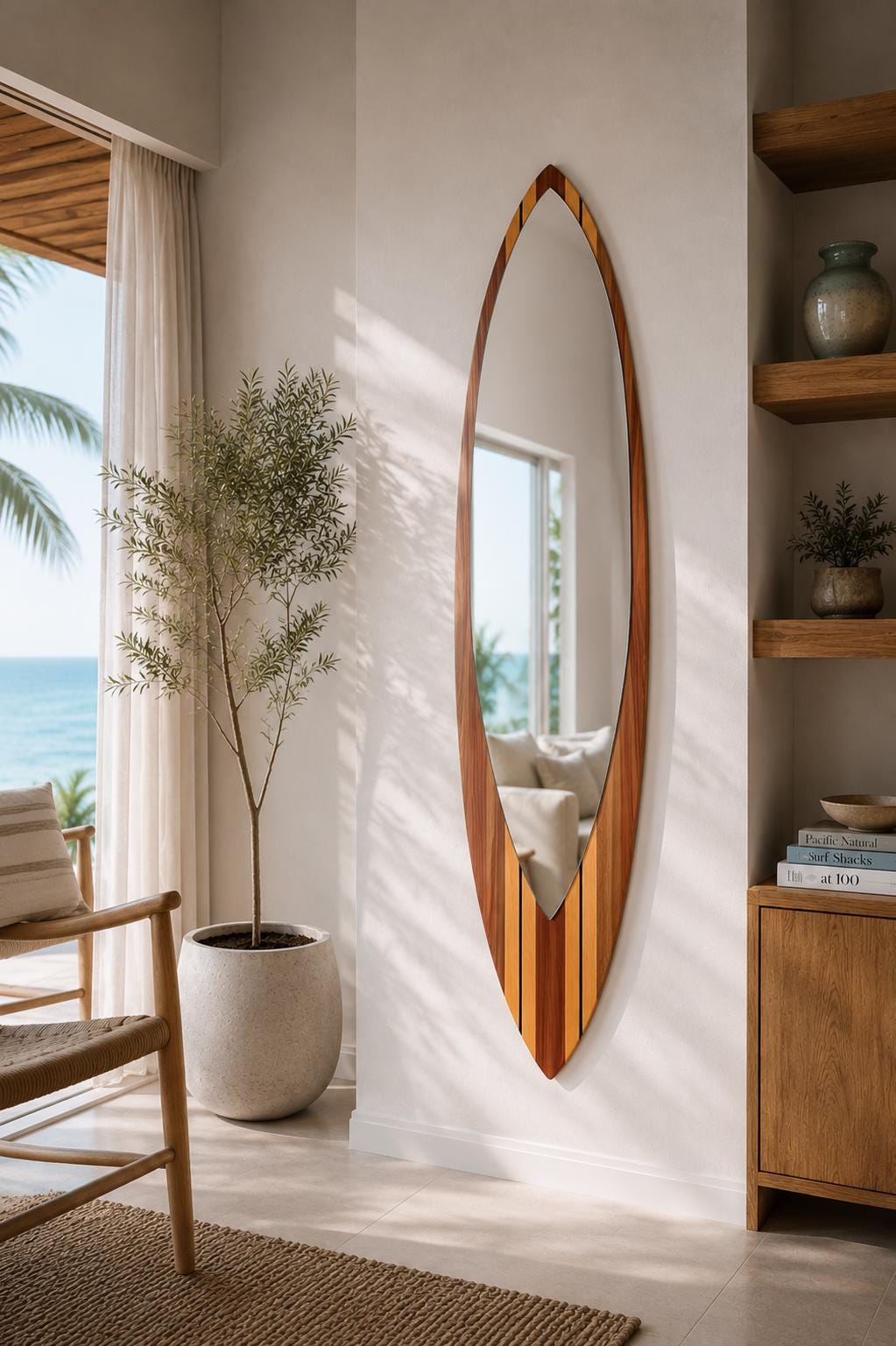
The mirror itself measures 48 inches tall. We cut it from a single sheet of beveled glass, which adds depth without the harsh edges you get from standard mirror cuts. The frame extends two inches beyond the glass on all sides, creating that authentic surfboard profile.
## The Construction Process Behind Authentic Surf Decor
We start every surfboard mirror by laying out reclaimed wood planks on our workshop floor. Some pieces are two inches wide. Others are six. The variation matters because real surfboards never look uniform.
I trace the surfboard template directly onto the wood arrangement. Then comes the tricky part: figuring out which grain directions complement each other. Vertical grain next to horizontal grain creates visual tension. All vertical looks too rigid. All horizontal looks lazy.
### Selecting Wood for Coastal Character
The wood selection takes longer than the actual construction. I reject about 40 percent of reclaimed planks because they lack character. Boring wood makes boring mirrors.
What I look for:
- Salt water staining from dock exposure
- Nail holes and hardware marks
- Color shifts from sun bleaching
- Grain patterns that suggest movement
A single surfboard mirror frame might combine five different wood types. Yesterday I used pine, mahogany, weathered cedar, old pallet oak, and a piece of driftwood maple. The final piece looked like it survived twenty years of beach house living.
## Handcrafted Details That Separate Real from Replica
The surfboard tail design determines whether your mirror reads as authentic or artificial. We cut three tail variations: fish tail, swallow tail, and pin tail. Each style references actual surfboard shaping traditions from different decades and surf cultures.
Fish tails work best in tight spaces because the split design creates negative space. The mirror at Vampire Penguin uses a fish tail specifically because their wall space sits between two doorways. The tail cutout allows sight lines through to the kitchen area.
Swallow tails give you more dramatic flair. These work in hotel lobbies and restaurant entry points where you want immediate visual impact. The deep V-cut in the tail creates strong vertical lines that draw eyes upward.
Pin tails deliver classic longboard aesthetics. These appeal to designers working on upscale properties where the reference needs to feel more sophisticated than playful.
## Installation Considerations for Commercial Spaces
Hotel and restaurant installations require different mounting than residential walls. We install French cleats on every surfboard mirror over 36 inches. The cleat system distributes weight across wall studs and allows easy removal for wall maintenance.
I learned this after a hotel maintenance team in Tampa called us because they needed to repaint. The mirror came down in two minutes, painting happened, mirror went back up. No damage, no stress, no service call fee.
The mirror weight matters for shipping and installation logistics. Our 48-inch surfboard mirrors weigh 18 pounds. Our 60-inch versions hit 25 pounds. This falls within single-person carry capacity, which reduces labor costs during installation.
## The Vampire Penguin Installation: A Case Study
The Ellenton location needed a focal point that connected their Hawaiian shaved ice concept with Florida beach culture. Their space has bright turquoise walls and white tile floors. A standard beach mirror would have disappeared into that color scheme.
We built their surfboard mirror using darker reclaimed wood tones: chocolate browns, deep grays, and sun-faded reds. The contrast made the piece pop while the organic wood texture softened the modern tile and paint. Installation took forty minutes, including level checking and final adjustments.
Three months after installation, their manager told me customers ask about the mirror daily. Some think it's an actual vintage surfboard. The handmade quality sells itself.
## Custom Sizing for Specific Design Needs
We build surfboard mirrors in five standard lengths: 36, 42, 48, 54, and 60 inches. These measurements come from years of watching what actually fits in commercial spaces. Bathroom walls, corridor segments, and above-counter areas all have size sweet spots.
The 48-inch size dominates our commercial orders because it works in the most locations. Large enough to make a statement, small enough to ship without freight complications. We can build larger custom sizes, but shipping costs jump significantly above 60 inches.
Width stays proportional to length, following traditional surfboard ratios. A 48-inch tall mirror measures 14 inches at its widest point. This proportion feels right to anyone who has seen actual surfboards.
## Maintenance Reality for High-Traffic Locations
The reclaimed wood gets three coats of water-based polyurethane before leaving our workshop. This seal protects against humidity, which matters in Florida and coastal properties everywhere. The finish also makes cleaning simple: damp cloth, mild soap, done.
The mirror glass needs standard glass cleaner. We bevel all edges, so there are no sharp corners to chip or crack during cleaning. In two years of commercial installations, we have had zero glass replacement requests.
## Why This Works for Your Next Project
Designers contact us when they need pieces that photograph well and survive real-world use. A handmade surfboard mirror delivers both. The Instagram posts write themselves, and the construction handles daily customer interaction.
If you are specifying decor for a coastal-themed restaurant, hotel renovation, or retail space, we can build surfboard mirrors that match your exact vision. Custom wood tones, specific tail shapes, and size adjustments all happen in our Sarasota workshop.
Ready to talk about your project? Email us at contact@handycor.store with your space dimensions and design direction. We will send you wood samples and detailed specifications within 48 hours.
The mirror itself measures 48 inches tall. We cut it from a single sheet of beveled glass, which adds depth without the harsh edges you get from standard mirror cuts. The frame extends two inches beyond the glass on all sides, creating that authentic surfboard profile.
## The Construction Process Behind Authentic Surf Decor
We start every surfboard mirror by laying out reclaimed wood planks on our workshop floor. Some pieces are two inches wide. Others are six. The variation matters because real surfboards never look uniform.
I trace the surfboard template directly onto the wood arrangement. Then comes the tricky part: figuring out which grain directions complement each other. Vertical grain next to horizontal grain creates visual tension. All vertical looks too rigid. All horizontal looks lazy.
### Selecting Wood for Coastal Character
The wood selection takes longer than the actual construction. I reject about 40 percent of reclaimed planks because they lack character. Boring wood makes boring mirrors.
What I look for:
- Salt water staining from dock exposure
- Nail holes and hardware marks
- Color shifts from sun bleaching
- Grain patterns that suggest movement
A single surfboard mirror frame might combine five different wood types. Yesterday I used pine, mahogany, weathered cedar, old pallet oak, and a piece of driftwood maple. The final piece looked like it survived twenty years of beach house living.
## Handcrafted Details That Separate Real from Replica
The surfboard tail design determines whether your mirror reads as authentic or artificial. We cut three tail variations: fish tail, swallow tail, and pin tail. Each style references actual surfboard shaping traditions from different decades and surf cultures.
Fish tails work best in tight spaces because the split design creates negative space. The mirror at Vampire Penguin uses a fish tail specifically because their wall space sits between two doorways. The tail cutout allows sight lines through to the kitchen area.
Swallow tails give you more dramatic flair. These work in hotel lobbies and restaurant entry points where you want immediate visual impact. The deep V-cut in the tail creates strong vertical lines that draw eyes upward.
Pin tails deliver classic longboard aesthetics. These appeal to designers working on upscale properties where the reference needs to feel more sophisticated than playful.
## Installation Considerations for Commercial Spaces
Hotel and restaurant installations require different mounting than residential walls. We install French cleats on every surfboard mirror over 36 inches. The cleat system distributes weight across wall studs and allows easy removal for wall maintenance.
I learned this after a hotel maintenance team in Tampa called us because they needed to repaint. The mirror came down in two minutes, painting happened, mirror went back up. No damage, no stress, no service call fee.
The mirror weight matters for shipping and installation logistics. Our 48-inch surfboard mirrors weigh 18 pounds. Our 60-inch versions hit 25 pounds. This falls within single-person carry capacity, which reduces labor costs during installation.
## The Vampire Penguin Installation: A Case Study
The Ellenton location needed a focal point that connected their Hawaiian shaved ice concept with Florida beach culture. Their space has bright turquoise walls and white tile floors. A standard beach mirror would have disappeared into that color scheme.
We built their surfboard mirror using darker reclaimed wood tones: chocolate browns, deep grays, and sun-faded reds. The contrast made the piece pop while the organic wood texture softened the modern tile and paint. Installation took forty minutes, including level checking and final adjustments.
Three months after installation, their manager told me customers ask about the mirror daily. Some think it's an actual vintage surfboard. The handmade quality sells itself.
## Custom Sizing for Specific Design Needs
We build surfboard mirrors in five standard lengths: 36, 42, 48, 54, and 60 inches. These measurements come from years of watching what actually fits in commercial spaces. Bathroom walls, corridor segments, and above-counter areas all have size sweet spots.
The 48-inch size dominates our commercial orders because it works in the most locations. Large enough to make a statement, small enough to ship without freight complications. We can build larger custom sizes, but shipping costs jump significantly above 60 inches.
Width stays proportional to length, following traditional surfboard ratios. A 48-inch tall mirror measures 14 inches at its widest point. This proportion feels right to anyone who has seen actual surfboards.
## Maintenance Reality for High-Traffic Locations
The reclaimed wood gets three coats of water-based polyurethane before leaving our workshop. This seal protects against humidity, which matters in Florida and coastal properties everywhere. The finish also makes cleaning simple: damp cloth, mild soap, done.
The mirror glass needs standard glass cleaner. We bevel all edges, so there are no sharp corners to chip or crack during cleaning. In two years of commercial installations, we have had zero glass replacement requests.
## Why This Works for Your Next Project
Designers contact us when they need pieces that photograph well and survive real-world use. A handmade surfboard mirror delivers both. The Instagram posts write themselves, and the construction handles daily customer interaction.
If you are specifying decor for a coastal-themed restaurant, hotel renovation, or retail space, we can build surfboard mirrors that match your exact vision. Custom wood tones, specific tail shapes, and size adjustments all happen in our Sarasota workshop.
Ready to talk about your project? Email us at contact@handycor.store with your space dimensions and design direction. We will send you wood samples and detailed specifications within 48 hours.