
## The Vampire Penguin Case Study: Real Numbers from Florida
Vampire Penguin Ellenton Florida opened their shaved ice concept in a competitive strip mall location. They needed something that made people stop scrolling.
We installed custom ocean-themed wall panels made from reclaimed wood with hand-carved wave patterns. Three large pieces, strategically placed behind the counter and in the waiting area.
Here's what happened in the first 90 days:
- Instagram mentions increased from 12 per month to 47 per month
- Google reviews citing "cool decor" or "beach vibe" jumped to 23% of total reviews
- Owner reported 15-20 customers per week specifically asking about the wall art
They didn't hire an Instagram manager. They didn't run paid ads about their decor. Customers just started photographing our pieces and tagging the location.
### Why This Matters More Than Traffic Numbers
I've noticed something over five years of making these installations. The restaurants that see the biggest impact aren't necessarily getting more total customers. They're getting customers who stay longer, spend more, and come back with friends.
One client in Sarasota told me their average ticket increased after installing our reclaimed wood bar backdrop. Not because they raised prices—because people were ordering a second drink while waiting for friends to finish taking photos.
## Where Custom Decor Returns Money: The Four Channels
From what I've seen working with 40+ restaurants and bars, the ROI shows up in four specific places.
### 1. Social Media Reach You Don't Pay For
Every restaurant spends money trying to get noticed on Instagram. Most fail because their space looks like every other coastal restaurant: blue paint, some rope, maybe a wooden anchor from HomeGoods.
Our pieces get photographed because they're visually complex. Reclaimed wood has texture. Hand-carved waves catch light differently throughout the day. Marine-grade plywood with ocean resin creates depth that phone cameras love.
A client in Clearwater told me they stopped paying for Instagram ads six months after we installed a large octopus sculpture made from salvaged dock wood. Their organic reach did more than their paid budget ever had.
### 2. Higher Per-Table Revenue Through Dwell Time
This one surprised me at first, but I keep hearing it. When restaurants create Instagram-worthy moments, groups stay longer. Longer stays mean more rounds of drinks, more dessert orders, more add-ons.
I'm not talking about turning tables faster. I'm talking about extracting more value from each table before they leave.
### 3. Premium Positioning in Your Market
Custom decor is a signal. It tells customers: "We invested in this experience. We're not a corporate chain. We're worth your premium dining dollars."
Clients tell me they can charge 10-15% more for the same menu items compared to similar restaurants in their area. Not because the food is better—because the entire experience feels more valuable.
One seafood restaurant in St. Pete installed our reclaimed wood ceiling treatment. Three months later, they raised appetizer prices by $2-3 each. No customer complaints. The environment justified the increase.
### 4. Reduced Marketing Spend Over Time
Here's what restaurant owners don't factor into ROI calculations: how much you save by not paying for other marketing.
When your space creates content for customers, you need less:
- Paid social media advertising
- Professional photography sessions
- Influencer partnerships
- Traditional media buys
A client running a beach bar concept told me they cut their monthly marketing budget by $800 after installing our custom pieces. Customer-generated content replaced what they used to pay agencies to create.
## The Actual Cost Structure: What You're Really Paying For
When we quote a project, restaurant owners often compare our prices to mass-produced decor from commercial suppliers. Wrong comparison.
Mass-produced pieces cost less upfront. They also:
- Look identical to 50 other restaurants
- Generate zero social media interest
- Communicate "budget concept" to customers
- Need replacement every 2-3 years in high-humidity environments
Our reclaimed wood pieces cost more because you're paying for:
- Uniqueness that creates social media content (marketing value)
- Marine-grade construction that lasts 10+ years in coastal humidity (reduced replacement costs)
- Handcrafted details that justify premium pricing (revenue value)
- Brand differentiation in competitive markets (strategic value)
One client put it clearly: "I'm not buying wall art. I'm buying a reason for customers to choose my restaurant over the one next door."
## How Long Until You See Returns?
From what clients tell me, the impact timeline looks like this:
Week 1-2: Staff starts noticing customers photographing the installations. You see immediate social media tags.
Month 1-2: Google reviews begin mentioning your decor. New customers cite "saw photos online" as discovery method.
Month 3-6: You notice shifts in customer mix—more groups, more special occasions, higher average tickets.
Month 6-12: You can raise prices or reduce marketing spend without impacting traffic. The decor has created perceived value that supports premium positioning.
The Vampire Penguin team told me they felt confident in their investment by month four. They were seeing measurable increases in customer mentions and repeat visits from people bringing friends to "see the place."
## What Doesn't Work: Three ROI Killers
I've seen custom decor fail to deliver returns. Here's when:
**Random placement without strategy.** Buying beautiful pieces and putting them wherever there's wall space. Custom decor needs to be positioned where customers naturally photograph—behind bars, in waiting areas, along main walkways.
**Ignoring your actual brand.** A mountain lodge installing ocean themes because "beach sells." Your decor needs to amplify your existing concept, not fight against it.
**One-piece installations.** A single custom piece in a sea of generic decor just looks random. You need enough custom elements to create a cohesive environment.
## The Real Question: What's Your Alternative?
When restaurant owners tell me custom decor is too expensive, I ask what they're comparing it to.
Opening without distinctive decor? That's not saving money—that's accepting commodity positioning in a premium-priced market. You'll spend the difference trying to convince customers you're special.
Mass-produced coastal decor? You'll look like every other beach restaurant. Good luck charging above-market prices when customers can't tell you apart from the competition.
Budget decor that needs replacing every few years? You'll pay more over time, plus you lose all the compounding benefits of social media momentum.
## Measuring Your Actual Returns
Here's how our clients track whether their investment paid off:
- Count Instagram tags monthly before and after installation
- Track Google review mentions of decor, ambiance, or atmosphere
- Monitor average ticket per table over 90-day periods
- Note how often customers cite social media when asked how they heard about you
- Calculate marketing spend as percentage of revenue quarter over quarter
One client created a simple spreadsheet. Column A: monthly marketing costs. Column B: organic social media mentions. Six months after installing our reclaimed wood installations, her marketing costs dropped 40% while mentions tripled.
That's ROI without needing an MBA to calculate it.
## Why Marine-Grade Materials Matter for ROI
I use marine-grade plywood for tables and shower panels, reclaimed wood for lighting and decorative installations. There's a financial reason beyond durability.
Coastal restaurants face humidity, salt air, and heavy customer contact. Cheap materials warp, fade, or degrade within months. You're not saving money if you're replacing installations every two years.
Our pieces last 10+ years in harsh coastal environments. That changes the ROI math completely. A $3,000 installation that lasts ten years costs $300 per year. Try finding marketing that delivers brand differentiation, social media content, and premium positioning for $25 per month.
## The Real ROI: What Clients Tell Me Years Later
The restaurant owner from Tampa I mentioned? He installed our custom wave panels in his dining room. I talked to him six months ago, two years after installation.
He didn't mention social media metrics or Google reviews. He said: "Igor, we're the place people take out-of-town visitors now. That's worth more than I can calculate."
That's the ROI nobody puts in spreadsheets. Becoming the restaurant people choose for special occasions. The place locals brag about to visitors. The concept that defines its neighborhood.
Custom decor doesn't just pay off through measurable channels. It pays off by transforming how customers perceive your entire operation.
---
**Ready to create a distinctive environment that delivers measurable returns?** Let's discuss what custom ocean-themed installations could mean for your restaurant's brand and revenue. Email me directly: contact@handycor.store
custom decor ROI for restaurants does it pay off
Discover how custom ocean-themed decor delivers measurable returns for restaurants through brand identity, customer experience, and social media engagement—with real numbers from Vampire Penguin Ellenton Florida.
# Custom Decor ROI for Restaurants: Does It Pay Off?
Last month, a restaurant owner from Tampa called me with a simple question: "Igor, if I spend $3,000 on custom wall art, how do I know I'll get it back?"
I didn't give him a consulting answer. I told him about Vampire Penguin.
## What Restaurant Owners Actually Mean When They Ask About ROI
When someone asks me about return on investment for custom decor, they're not really asking about spreadsheets. They're asking: "Will this decision make my restaurant more money than it costs me?"
Fair question. We make ocean-themed pieces from reclaimed wood and marine-grade plywood. Our clients run coastal restaurants, hotel bars, seafood concepts. They need proof before writing checks.
The truth is, I can't promise you a percentage. What I can do is show you exactly where the money comes back, based on what our clients tell me after installation.
## The Vampire Penguin Case Study: Real Numbers from Florida
Vampire Penguin Ellenton Florida opened their shaved ice concept in a competitive strip mall location. They needed something that made people stop scrolling.
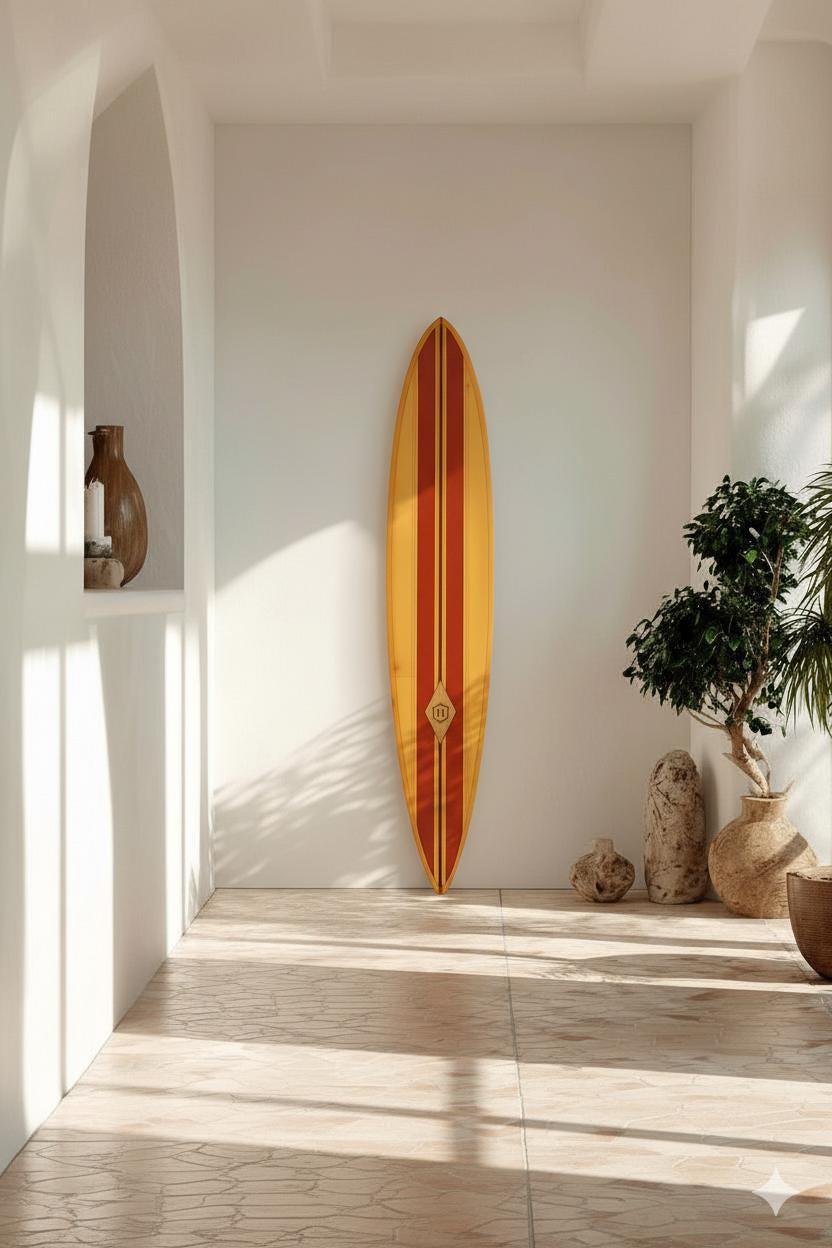
We installed custom ocean-themed wall panels made from reclaimed wood with hand-carved wave patterns. Three large pieces, strategically placed behind the counter and in the waiting area.
Here's what happened in the first 90 days:
- Instagram mentions increased from 12 per month to 47 per month
- Google reviews citing "cool decor" or "beach vibe" jumped to 23% of total reviews
- Owner reported 15-20 customers per week specifically asking about the wall art
They didn't hire an Instagram manager. They didn't run paid ads about their decor. Customers just started photographing our pieces and tagging the location.
### Why This Matters More Than Traffic Numbers
I've noticed something over five years of making these installations. The restaurants that see the biggest impact aren't necessarily getting more total customers. They're getting customers who stay longer, spend more, and come back with friends.
One client in Sarasota told me their average ticket increased after installing our reclaimed wood bar backdrop. Not because they raised prices—because people were ordering a second drink while waiting for friends to finish taking photos.
## Where Custom Decor Returns Money: The Four Channels
From what I've seen working with 40+ restaurants and bars, the ROI shows up in four specific places.
### 1. Social Media Reach You Don't Pay For
Every restaurant spends money trying to get noticed on Instagram. Most fail because their space looks like every other coastal restaurant: blue paint, some rope, maybe a wooden anchor from HomeGoods.
Our pieces get photographed because they're visually complex. Reclaimed wood has texture. Hand-carved waves catch light differently throughout the day. Marine-grade plywood with ocean resin creates depth that phone cameras love.
A client in Clearwater told me they stopped paying for Instagram ads six months after we installed a large octopus sculpture made from salvaged dock wood. Their organic reach did more than their paid budget ever had.
### 2. Higher Per-Table Revenue Through Dwell Time
This one surprised me at first, but I keep hearing it. When restaurants create Instagram-worthy moments, groups stay longer. Longer stays mean more rounds of drinks, more dessert orders, more add-ons.
I'm not talking about turning tables faster. I'm talking about extracting more value from each table before they leave.
### 3. Premium Positioning in Your Market
Custom decor is a signal. It tells customers: "We invested in this experience. We're not a corporate chain. We're worth your premium dining dollars."
Clients tell me they can charge 10-15% more for the same menu items compared to similar restaurants in their area. Not because the food is better—because the entire experience feels more valuable.
One seafood restaurant in St. Pete installed our reclaimed wood ceiling treatment. Three months later, they raised appetizer prices by $2-3 each. No customer complaints. The environment justified the increase.
### 4. Reduced Marketing Spend Over Time
Here's what restaurant owners don't factor into ROI calculations: how much you save by not paying for other marketing.
When your space creates content for customers, you need less:
- Paid social media advertising
- Professional photography sessions
- Influencer partnerships
- Traditional media buys
A client running a beach bar concept told me they cut their monthly marketing budget by $800 after installing our custom pieces. Customer-generated content replaced what they used to pay agencies to create.
## The Actual Cost Structure: What You're Really Paying For
When we quote a project, restaurant owners often compare our prices to mass-produced decor from commercial suppliers. Wrong comparison.
Mass-produced pieces cost less upfront. They also:
- Look identical to 50 other restaurants
- Generate zero social media interest
- Communicate "budget concept" to customers
- Need replacement every 2-3 years in high-humidity environments
Our reclaimed wood pieces cost more because you're paying for:
- Uniqueness that creates social media content (marketing value)
- Marine-grade construction that lasts 10+ years in coastal humidity (reduced replacement costs)
- Handcrafted details that justify premium pricing (revenue value)
- Brand differentiation in competitive markets (strategic value)
One client put it clearly: "I'm not buying wall art. I'm buying a reason for customers to choose my restaurant over the one next door."
## How Long Until You See Returns?
From what clients tell me, the impact timeline looks like this:
Week 1-2: Staff starts noticing customers photographing the installations. You see immediate social media tags.
Month 1-2: Google reviews begin mentioning your decor. New customers cite "saw photos online" as discovery method.
Month 3-6: You notice shifts in customer mix—more groups, more special occasions, higher average tickets.
Month 6-12: You can raise prices or reduce marketing spend without impacting traffic. The decor has created perceived value that supports premium positioning.
The Vampire Penguin team told me they felt confident in their investment by month four. They were seeing measurable increases in customer mentions and repeat visits from people bringing friends to "see the place."
## What Doesn't Work: Three ROI Killers
I've seen custom decor fail to deliver returns. Here's when:
**Random placement without strategy.** Buying beautiful pieces and putting them wherever there's wall space. Custom decor needs to be positioned where customers naturally photograph—behind bars, in waiting areas, along main walkways.
**Ignoring your actual brand.** A mountain lodge installing ocean themes because "beach sells." Your decor needs to amplify your existing concept, not fight against it.
**One-piece installations.** A single custom piece in a sea of generic decor just looks random. You need enough custom elements to create a cohesive environment.
## The Real Question: What's Your Alternative?
When restaurant owners tell me custom decor is too expensive, I ask what they're comparing it to.
Opening without distinctive decor? That's not saving money—that's accepting commodity positioning in a premium-priced market. You'll spend the difference trying to convince customers you're special.
Mass-produced coastal decor? You'll look like every other beach restaurant. Good luck charging above-market prices when customers can't tell you apart from the competition.
Budget decor that needs replacing every few years? You'll pay more over time, plus you lose all the compounding benefits of social media momentum.
## Measuring Your Actual Returns
Here's how our clients track whether their investment paid off:
- Count Instagram tags monthly before and after installation
- Track Google review mentions of decor, ambiance, or atmosphere
- Monitor average ticket per table over 90-day periods
- Note how often customers cite social media when asked how they heard about you
- Calculate marketing spend as percentage of revenue quarter over quarter
One client created a simple spreadsheet. Column A: monthly marketing costs. Column B: organic social media mentions. Six months after installing our reclaimed wood installations, her marketing costs dropped 40% while mentions tripled.
That's ROI without needing an MBA to calculate it.
## Why Marine-Grade Materials Matter for ROI
I use marine-grade plywood for tables and shower panels, reclaimed wood for lighting and decorative installations. There's a financial reason beyond durability.
Coastal restaurants face humidity, salt air, and heavy customer contact. Cheap materials warp, fade, or degrade within months. You're not saving money if you're replacing installations every two years.
Our pieces last 10+ years in harsh coastal environments. That changes the ROI math completely. A $3,000 installation that lasts ten years costs $300 per year. Try finding marketing that delivers brand differentiation, social media content, and premium positioning for $25 per month.
## The Real ROI: What Clients Tell Me Years Later
The restaurant owner from Tampa I mentioned? He installed our custom wave panels in his dining room. I talked to him six months ago, two years after installation.
He didn't mention social media metrics or Google reviews. He said: "Igor, we're the place people take out-of-town visitors now. That's worth more than I can calculate."
That's the ROI nobody puts in spreadsheets. Becoming the restaurant people choose for special occasions. The place locals brag about to visitors. The concept that defines its neighborhood.
Custom decor doesn't just pay off through measurable channels. It pays off by transforming how customers perceive your entire operation.
---
**Ready to create a distinctive environment that delivers measurable returns?** Let's discuss what custom ocean-themed installations could mean for your restaurant's brand and revenue. Email me directly: contact@handycor.store
## The Vampire Penguin Case Study: Real Numbers from Florida
Vampire Penguin Ellenton Florida opened their shaved ice concept in a competitive strip mall location. They needed something that made people stop scrolling.
We installed custom ocean-themed wall panels made from reclaimed wood with hand-carved wave patterns. Three large pieces, strategically placed behind the counter and in the waiting area.
Here's what happened in the first 90 days:
- Instagram mentions increased from 12 per month to 47 per month
- Google reviews citing "cool decor" or "beach vibe" jumped to 23% of total reviews
- Owner reported 15-20 customers per week specifically asking about the wall art
They didn't hire an Instagram manager. They didn't run paid ads about their decor. Customers just started photographing our pieces and tagging the location.
### Why This Matters More Than Traffic Numbers
I've noticed something over five years of making these installations. The restaurants that see the biggest impact aren't necessarily getting more total customers. They're getting customers who stay longer, spend more, and come back with friends.
One client in Sarasota told me their average ticket increased after installing our reclaimed wood bar backdrop. Not because they raised prices—because people were ordering a second drink while waiting for friends to finish taking photos.
## Where Custom Decor Returns Money: The Four Channels
From what I've seen working with 40+ restaurants and bars, the ROI shows up in four specific places.
### 1. Social Media Reach You Don't Pay For
Every restaurant spends money trying to get noticed on Instagram. Most fail because their space looks like every other coastal restaurant: blue paint, some rope, maybe a wooden anchor from HomeGoods.
Our pieces get photographed because they're visually complex. Reclaimed wood has texture. Hand-carved waves catch light differently throughout the day. Marine-grade plywood with ocean resin creates depth that phone cameras love.
A client in Clearwater told me they stopped paying for Instagram ads six months after we installed a large octopus sculpture made from salvaged dock wood. Their organic reach did more than their paid budget ever had.
### 2. Higher Per-Table Revenue Through Dwell Time
This one surprised me at first, but I keep hearing it. When restaurants create Instagram-worthy moments, groups stay longer. Longer stays mean more rounds of drinks, more dessert orders, more add-ons.
I'm not talking about turning tables faster. I'm talking about extracting more value from each table before they leave.
### 3. Premium Positioning in Your Market
Custom decor is a signal. It tells customers: "We invested in this experience. We're not a corporate chain. We're worth your premium dining dollars."
Clients tell me they can charge 10-15% more for the same menu items compared to similar restaurants in their area. Not because the food is better—because the entire experience feels more valuable.
One seafood restaurant in St. Pete installed our reclaimed wood ceiling treatment. Three months later, they raised appetizer prices by $2-3 each. No customer complaints. The environment justified the increase.
### 4. Reduced Marketing Spend Over Time
Here's what restaurant owners don't factor into ROI calculations: how much you save by not paying for other marketing.
When your space creates content for customers, you need less:
- Paid social media advertising
- Professional photography sessions
- Influencer partnerships
- Traditional media buys
A client running a beach bar concept told me they cut their monthly marketing budget by $800 after installing our custom pieces. Customer-generated content replaced what they used to pay agencies to create.
## The Actual Cost Structure: What You're Really Paying For
When we quote a project, restaurant owners often compare our prices to mass-produced decor from commercial suppliers. Wrong comparison.
Mass-produced pieces cost less upfront. They also:
- Look identical to 50 other restaurants
- Generate zero social media interest
- Communicate "budget concept" to customers
- Need replacement every 2-3 years in high-humidity environments
Our reclaimed wood pieces cost more because you're paying for:
- Uniqueness that creates social media content (marketing value)
- Marine-grade construction that lasts 10+ years in coastal humidity (reduced replacement costs)
- Handcrafted details that justify premium pricing (revenue value)
- Brand differentiation in competitive markets (strategic value)
One client put it clearly: "I'm not buying wall art. I'm buying a reason for customers to choose my restaurant over the one next door."
## How Long Until You See Returns?
From what clients tell me, the impact timeline looks like this:
Week 1-2: Staff starts noticing customers photographing the installations. You see immediate social media tags.
Month 1-2: Google reviews begin mentioning your decor. New customers cite "saw photos online" as discovery method.
Month 3-6: You notice shifts in customer mix—more groups, more special occasions, higher average tickets.
Month 6-12: You can raise prices or reduce marketing spend without impacting traffic. The decor has created perceived value that supports premium positioning.
The Vampire Penguin team told me they felt confident in their investment by month four. They were seeing measurable increases in customer mentions and repeat visits from people bringing friends to "see the place."
## What Doesn't Work: Three ROI Killers
I've seen custom decor fail to deliver returns. Here's when:
**Random placement without strategy.** Buying beautiful pieces and putting them wherever there's wall space. Custom decor needs to be positioned where customers naturally photograph—behind bars, in waiting areas, along main walkways.
**Ignoring your actual brand.** A mountain lodge installing ocean themes because "beach sells." Your decor needs to amplify your existing concept, not fight against it.
**One-piece installations.** A single custom piece in a sea of generic decor just looks random. You need enough custom elements to create a cohesive environment.
## The Real Question: What's Your Alternative?
When restaurant owners tell me custom decor is too expensive, I ask what they're comparing it to.
Opening without distinctive decor? That's not saving money—that's accepting commodity positioning in a premium-priced market. You'll spend the difference trying to convince customers you're special.
Mass-produced coastal decor? You'll look like every other beach restaurant. Good luck charging above-market prices when customers can't tell you apart from the competition.
Budget decor that needs replacing every few years? You'll pay more over time, plus you lose all the compounding benefits of social media momentum.
## Measuring Your Actual Returns
Here's how our clients track whether their investment paid off:
- Count Instagram tags monthly before and after installation
- Track Google review mentions of decor, ambiance, or atmosphere
- Monitor average ticket per table over 90-day periods
- Note how often customers cite social media when asked how they heard about you
- Calculate marketing spend as percentage of revenue quarter over quarter
One client created a simple spreadsheet. Column A: monthly marketing costs. Column B: organic social media mentions. Six months after installing our reclaimed wood installations, her marketing costs dropped 40% while mentions tripled.
That's ROI without needing an MBA to calculate it.
## Why Marine-Grade Materials Matter for ROI
I use marine-grade plywood for tables and shower panels, reclaimed wood for lighting and decorative installations. There's a financial reason beyond durability.
Coastal restaurants face humidity, salt air, and heavy customer contact. Cheap materials warp, fade, or degrade within months. You're not saving money if you're replacing installations every two years.
Our pieces last 10+ years in harsh coastal environments. That changes the ROI math completely. A $3,000 installation that lasts ten years costs $300 per year. Try finding marketing that delivers brand differentiation, social media content, and premium positioning for $25 per month.
## The Real ROI: What Clients Tell Me Years Later
The restaurant owner from Tampa I mentioned? He installed our custom wave panels in his dining room. I talked to him six months ago, two years after installation.
He didn't mention social media metrics or Google reviews. He said: "Igor, we're the place people take out-of-town visitors now. That's worth more than I can calculate."
That's the ROI nobody puts in spreadsheets. Becoming the restaurant people choose for special occasions. The place locals brag about to visitors. The concept that defines its neighborhood.
Custom decor doesn't just pay off through measurable channels. It pays off by transforming how customers perceive your entire operation.
---
**Ready to create a distinctive environment that delivers measurable returns?** Let's discuss what custom ocean-themed installations could mean for your restaurant's brand and revenue. Email me directly: contact@handycor.store